
Class 1 Truck License Montreal
A Class 1 licence opens access to long‑combination tractor‑trailers, heavy freight and higher‑paying regional work across Quebec and Canada. In Greater Montreal, demand remains high for qualified drivers to serve freight terminals, intermodal yards, construction logistics and fuel distribution. Employers in Ville‑Saint‑Laurent, the West Island and Laval often list Class 1 as a minimum requirement and prefer candidates with air brake and TDG credentials. For career mobility and stronger earnings potential, Class 1 training at a local truck driving school is a direct path to steady work in Montreal’s transport network.
Requirements, Testing, and Practical Skills
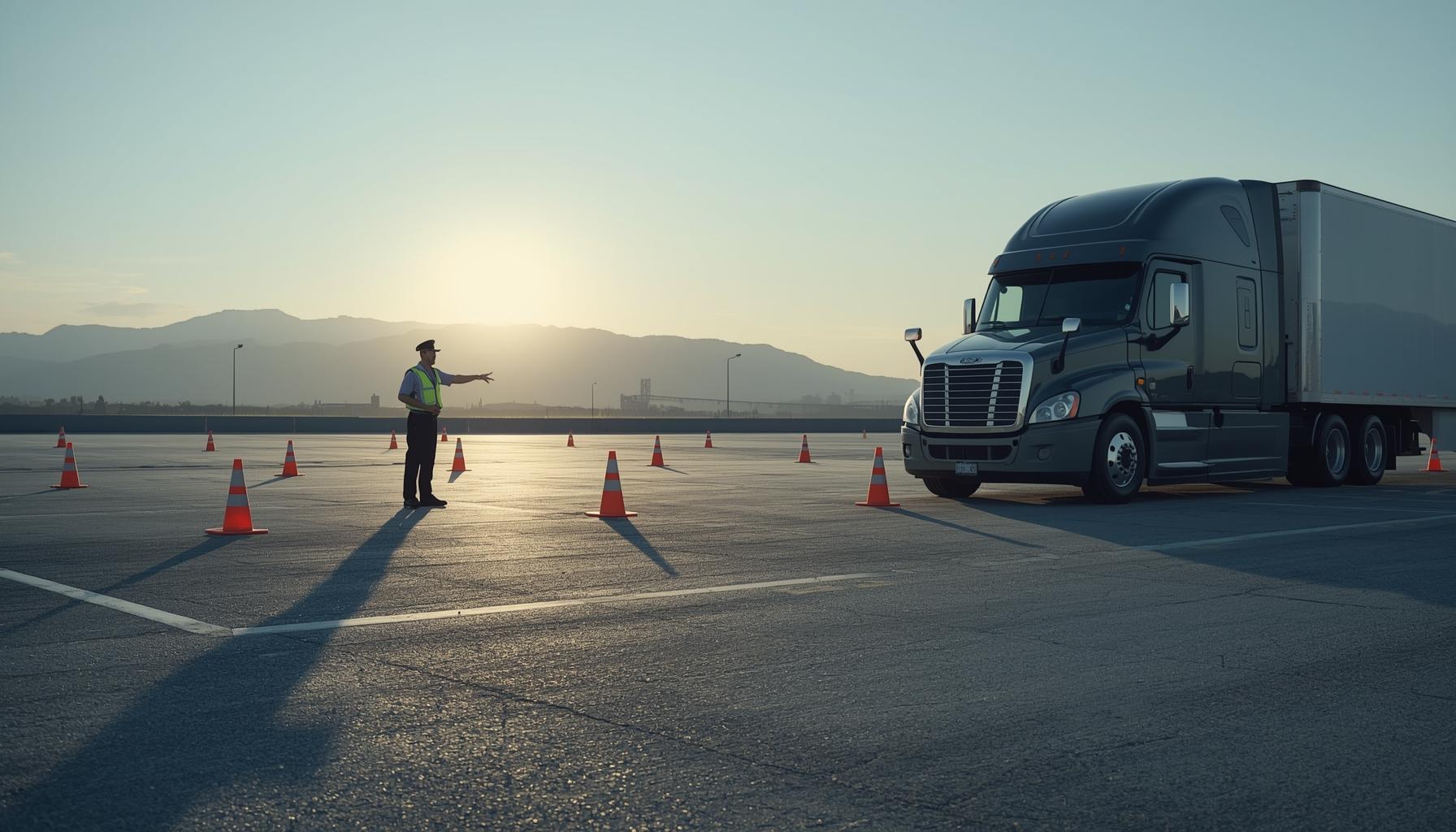
Eligibility typically requires a valid Quebec driver’s licence and a minimum age of 18 for provincial operation. Medical clearance through a physician is mandatory before the road test; the SAAQ requires documentation confirming fitness, vision screening and any required restrictions. The SAAQ written knowledge exam for heavy vehicles covers vehicle systems, hours of service rules, safe loading and emergency procedures. Candidates must also obtain the air brake endorsement when driving vehicles equipped with that system; this involves a classroom component and a practical test on air‑braked equipment.
Key knowledge areas for the written exam and practical testing include: vehicle inspection protocol, braking systems and ABS behavior, coupling and uncoupling procedures, backing techniques for trailers, defensive strategies for highway and urban freight, cargo securement rules and basic instrumentation reading. Pre‑trip inspection expectations require a systematic walk‑around that documents steering, suspension, lights, tires, hubs, drivetrain and air‑brake system integrity. On‑road evaluation focuses on lane discipline, speed management, space management at interchanges, merging and right‑of‑way judgments. Drivers are tested on controlled backing, coupling/uncoupling and safe maneuvering in tight industrial yards.
Hours of service and logbook rules are governed by federal regulations when operating interprovincially and by provincial standards for purely intraprovincial carriers. Record keeping, duty status entries and rest break protocols are emphasized in classroom training to reduce fatigue risks and ensure compliance during inspections.
Training Programs, Curriculum, and Practical Setup

Universal Driving School offers modular Class 1 training that combines classroom theory, practical drills, simulator time and real‑world practice routes around Montreal. Course design aligns with SAAQ requirements and employer expectations in Laval and the West Island. Training emphasizes replicable driving patterns for common Montreal routes, safe navigation of the metropolitan road network and terminal operations at major freight hubs.
Below is a sample curriculum breakdown that reflects hours and components commonly provided by truck driving schools in Montreal. Text precedes and follows the schedule to explain how modules connect to testing and employment readiness.
| Module | Classroom Hours | On‑Vehicle Hours | Skills Practiced |
|---|---|---|---|
| Theory and Regulations | 24 | 0 | SAAQ knowledge, hours of service, cargo securement |
| Air Brake Instruction | 8 | 4 | Air system operation, leak tests, emergency procedure |
| Range and Yard Drills | 10 | 16 | Backing, coupling, low‑speed control, obstacle avoidance |
| Highway Driving | 6 | 20 | Merging, lane changes, space management, fuel efficiency |
| Simulator Sessions | 4 | 0 | Night driving, hazard perception, adverse weather |
| Road Test Preparation | 4 | 8 | Pre‑trip repetition, exam route practice, paperwork |
| Total | 56 | 48 | Comprehensive practical and theoretical coverage |
Training integrates simulator drills to practice hazard recognition and bad‑weather responses without risk. Practical routes include industrial areas in Ville‑Saint‑Laurent, highway segments to Laval and container terminal approaches to mimic employer routes. Students receive a focused pre‑trip inspection checklist and repeated coupling/uncoupling practice to build speed and accuracy.
Booking, Fees, Failure Causes, and Career Steps
Enrollment and road test booking are completed via the SAAQ portal and through Universal Driving School’s front desk for in‑class scheduling. Common failure causes include incomplete pre‑trip inspections, unsafe backing maneuvers, inadequate observation at intersections and poor space management during lane changes. Avoiding these failures requires disciplined checklist use, consistent range practice and instructor feedback loops.
Typical fees for comprehensive Class 1 programs in Montreal range by school but often include tuition, vehicle rental for the SAAQ road test and permit processing support. Many providers offer payment plans, employer sponsorships and discounted bundle pricing for combined air brake and TDG certification. Additional endorsements that improve employability include tanker handling and Transport of Dangerous Goods certification.
Employment prospects across Montreal and Laval include local delivery operators, long‑haul freight carriers, municipal road contracts and private logistics companies. Preparing a resume should highlight SAAQ licensing dates, endorsements, logged training hours, and any safety or helmet certifications. Refresher lessons and retesting options are available for drivers returning to the field or correcting deficiencies identified by employers.
Safety Protocols, Support, and Enrollment Steps
Safety training covers emergency braking, hazard avoidance, post‑crash procedures and regulatory reporting obligations. Universal Driving School provides student support through progress reports, mock exams and assistance with SAAQ paperwork. Financing options, group discounts for corporate clients and targeted refresher modules are available to suit schedules across Ville‑Saint‑Laurent, West Island and Laval.
Enrollment begins with verification of current licence, a medical form for the SAAQ, booking the written knowledge test and selecting a course timetable. Contact Universal Driving School to confirm class start dates, vehicle availability and package details for Class 1 training, heavy vehicle training and air brake instruction.